Precision measuring instruments for accurate external, internal, and depth measurements in agriculture and related fields.
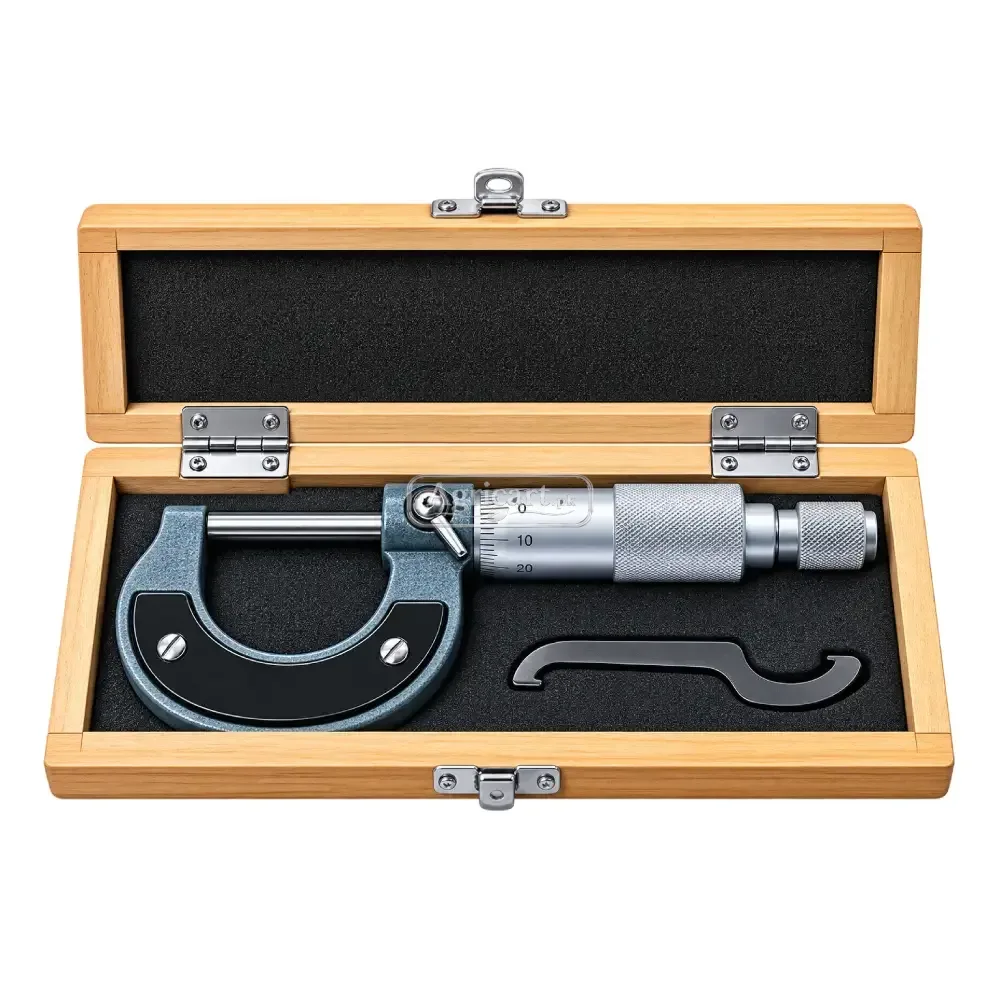
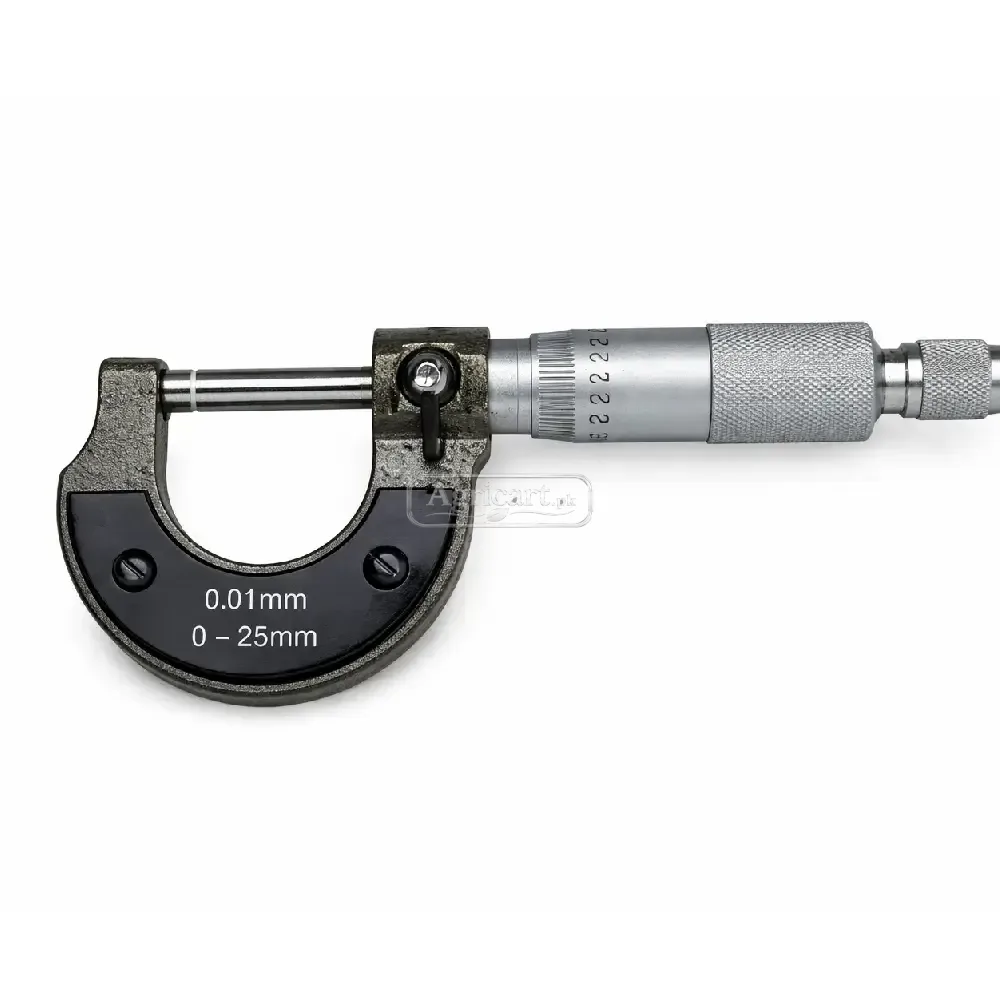
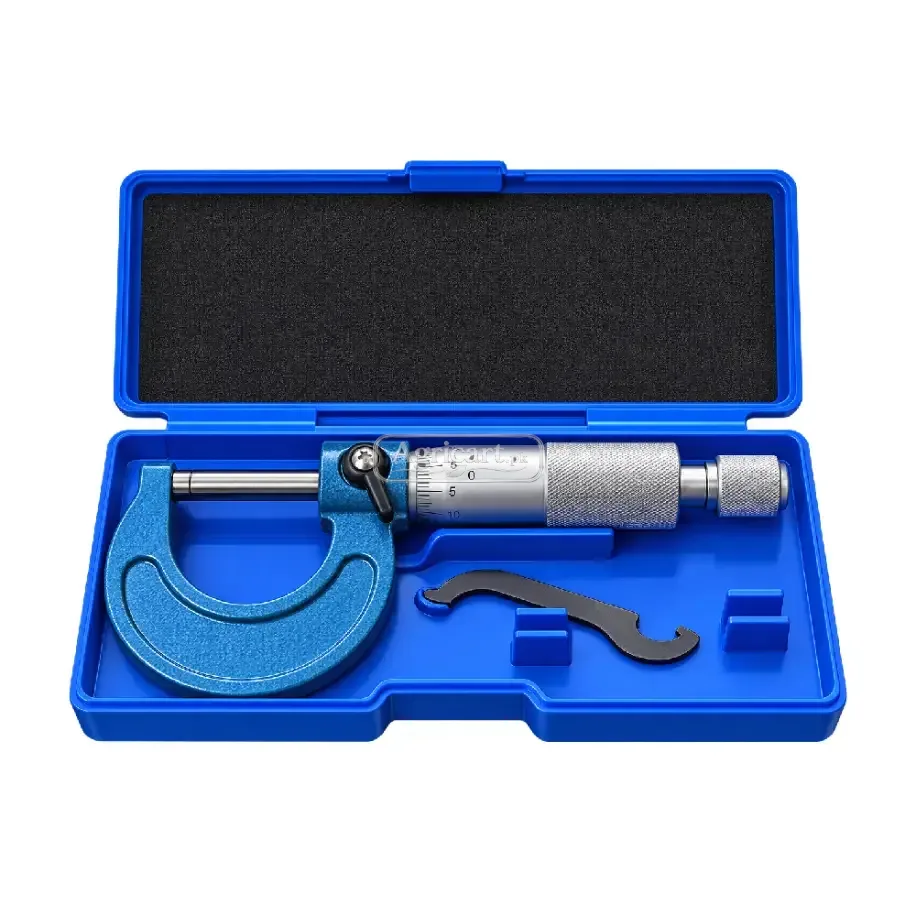
Micrometers are essential precision measuring tools used to obtain highly accurate measurements of small distances, thicknesses, and diameters. In agriculture, they are invaluable for tasks such as measuring seed size, plant stem thickness, soil particle size analysis, and the precise dimensions of various agricultural components or machinery parts. Our range of micrometers includes external, internal, and depth micrometers, available in both analog and digital formats, to cater to diverse measurement needs with exceptional accuracy and reliability. These tools are built for durability and consistent performance, ensuring that your measurements are always precise.
Before use, ensure the micrometer is clean and calibrated. Gently turn the thimble until the object is held between the anvil and spindle. Use the ratchet stop to apply consistent pressure. Read the main scale, thimble scale, and vernier scale (if applicable) for the final measurement. For digital micrometers, simply place the object and read the display. Store in a protective case in a dry environment.
Provides highly accurate measurements for critical agricultural applications. Enhances quality control and precision in farming practices. Durable construction ensures long-term reliability. Available in various types (external, internal, depth) and formats (analog, digital) to suit specific needs. Improves efficiency in tasks requiring precise dimensional analysis.
Avoid dropping the micrometer as it can affect its calibration and accuracy. Do not overtighten the thimble, as this can damage the workpiece or the instrument. Keep away from dust, moisture, and extreme temperatures. Do not use for purposes other than measurement. Regular calibration is recommended for sustained accuracy.
Consider the type of measurement needed (external, internal, depth). Determine the required measurement range and accuracy (e.g., 0-25mm, 0.01mm precision). Choose between analog for traditional use or digital for ease of reading and data output. Look for durable materials like hardened steel or carbide measuring faces. Check for features like ratchet stop for consistent pressure and a locking clamp for holding measurements. Consider brands known for quality and reliability.
Standard import duties and taxes apply as per Pakistan Customs regulations for precision measuring instruments.
Ensure compliance with PSQCA standards for measuring instruments. Proper documentation for origin and specifications required.
No specific export restrictions for micrometers from Pakistan, but buyer country regulations must be observed.
- What is a micrometer used for?
- A micrometer is used for precise measurement of small distances, thicknesses, and diameters, often in applications requiring high accuracy like measuring seed size or machinery parts.
- What is the difference between an analog and a digital micrometer?
- An analog micrometer requires reading scales to determine the measurement, while a digital micrometer displays the measurement directly on a screen, often with higher resolution and easier readability.
- How often should a micrometer be calibrated?
- For optimal accuracy, micrometers should be calibrated regularly, typically every 6-12 months, or more frequently if used heavily or in critical applications.
- Can micrometers be used for measuring liquids?
- No, micrometers are designed for measuring solid objects and are not suitable for measuring liquids. They measure physical dimensions like length, thickness, and diameter.