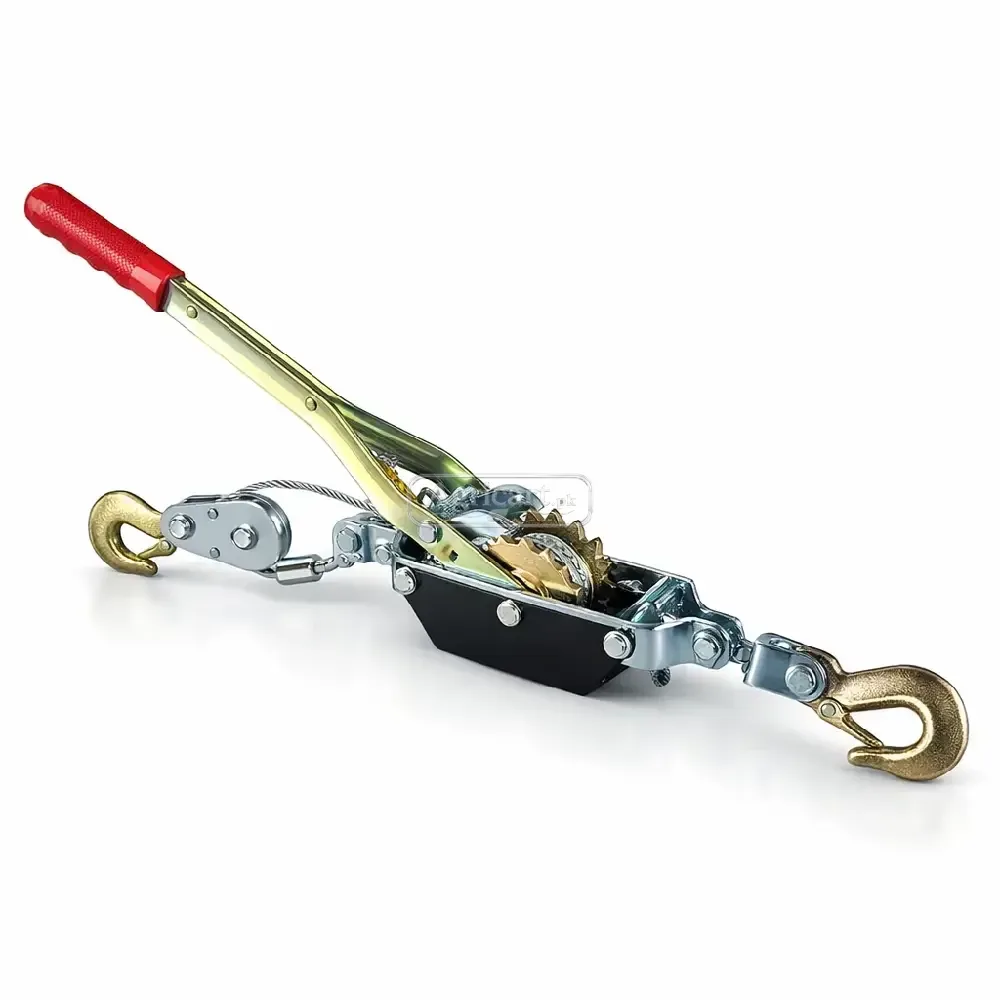
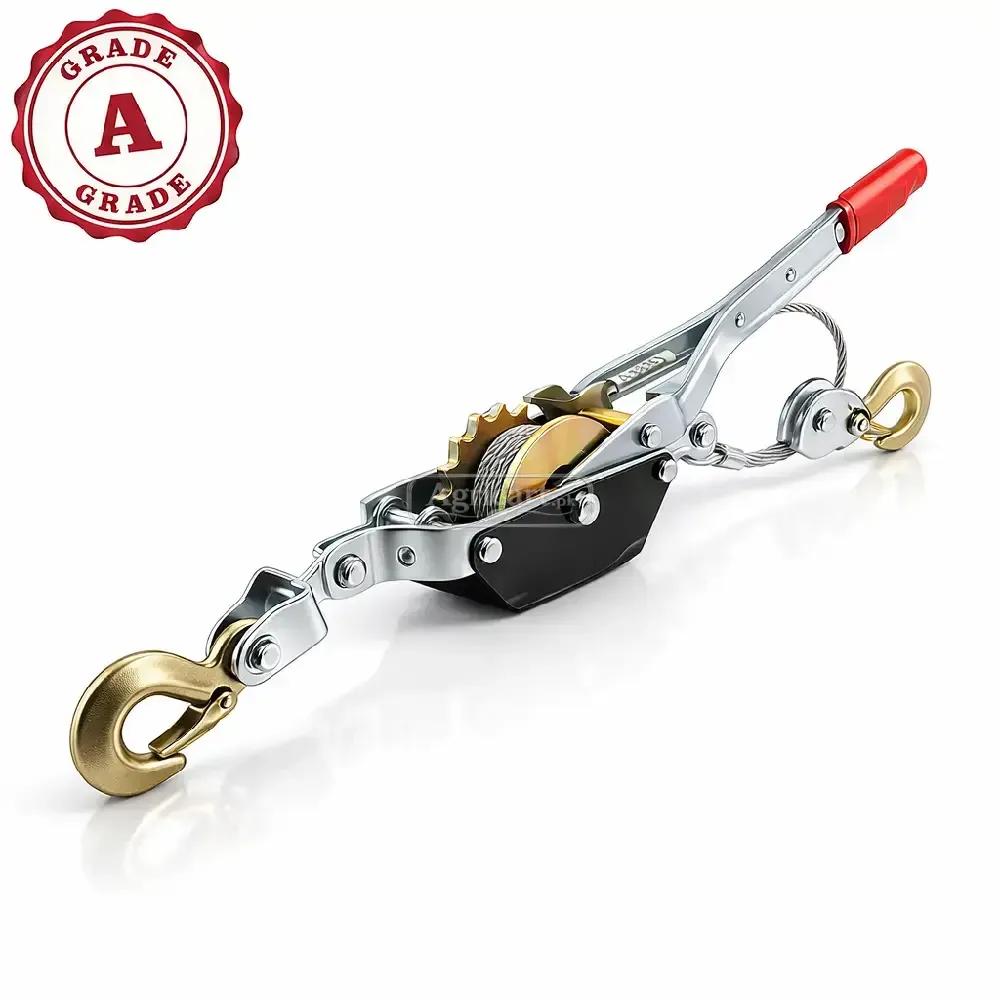
Efficient and robust manual ratchet puller with wire rope, designed for heavy-duty pulling, lifting, and tensioning tasks in agricultural and industrial settings. Ideal for moving logs, stretching fences, and recovering vehicles.
Wire Rope Manual Ratchet Puller
The Wire Rope Manual Ratchet Puller is an indispensable tool for anyone requiring reliable and powerful pulling or tensioning capabilities without the need for external power. Constructed from high-strength steel, this puller features a durable wire rope that ensures maximum strength and longevity. Its robust ratchet mechanism allows for precise, controlled movement, making it perfect for a wide range of applications including agricultural tasks like fence stretching and machinery positioning, as well as general utility for moving heavy objects, vehicle recovery, and construction work. The ergonomic handle provides a comfortable grip, reducing user fatigue during operation. With its compact design, it's easy to store and transport, making it a versatile addition to any toolkit.
Always inspect the puller, wire rope, and hooks for damage before each use. Ensure the load does not exceed the puller's rated capacity. Securely attach hooks to stable anchor points and the load. Operate the ratchet handle smoothly and deliberately. Never stand in the line of pull. Wear appropriate safety gear, including gloves and eye protection. Do not use for overhead lifting of people or over occupied areas.
When selecting a Wire Rope Manual Ratchet Puller, consider the maximum load capacity required for your typical tasks. Look for pullers with high-strength steel construction and a durable, corrosion-resistant wire rope. Check the length of the wire rope to ensure it meets your operational needs. Ergonomic handle design and a reliable ratchet mechanism are crucial for ease of use and safety. Always compare the working load limit (WLL) with your intended applications. For agricultural use, ensure it can handle tasks like fence tensioning and moving farm equipment. Agricart offers a range of high-quality pullers to suit various needs.
Please ensure correct classification under HS Code 8425.19.00 for 'Pulley tackle and hoists other than skip hoists; winches and capstans; jacks'. Specific duty rates may apply based on origin and trade agreements.
Importers should verify compliance with local safety standards and certifications for lifting and pulling equipment. Ensure all product labeling includes necessary warnings and specifications in English and Urdu. Proper documentation for customs clearance is essential.
Exporters must provide accurate product descriptions and HS codes. Ensure packaging meets international shipping standards to prevent damage. Compliance with the importing country's regulations regarding safety and labeling is crucial.
8425.19.00
- What is the maximum load capacity of this puller?
- The maximum load capacity varies by model. Please refer to the specific product specifications for the exact working load limit (WLL) of your chosen puller.
- Can this puller be used for lifting objects vertically?
- While designed for pulling and tensioning, many models can be used for vertical lifting within their rated capacity. However, it is crucial to ensure secure anchoring and proper safety precautions. Always check the manufacturer's guidelines for specific lifting applications.
- Is the wire rope replaceable?
- Yes, in most high-quality wire rope manual ratchet pullers, the wire rope is designed to be replaceable. This allows for extended tool life and cost-effective maintenance. Always use a wire rope of the correct diameter and strength as specified by the manufacturer.
- What maintenance is required for this tool?
- Regular maintenance includes cleaning the puller after use, lubricating moving parts (ratchet mechanism, gears), and inspecting the wire rope and hooks for wear, corrosion, or damage. Store in a dry place to prevent rust.
- Can I use this for vehicle recovery?
- Yes, a Wire Rope Manual Ratchet Puller is an excellent tool for vehicle recovery, especially in off-road or remote situations where powered winches are unavailable. Ensure the puller's capacity matches the vehicle's weight and that anchor points are secure.