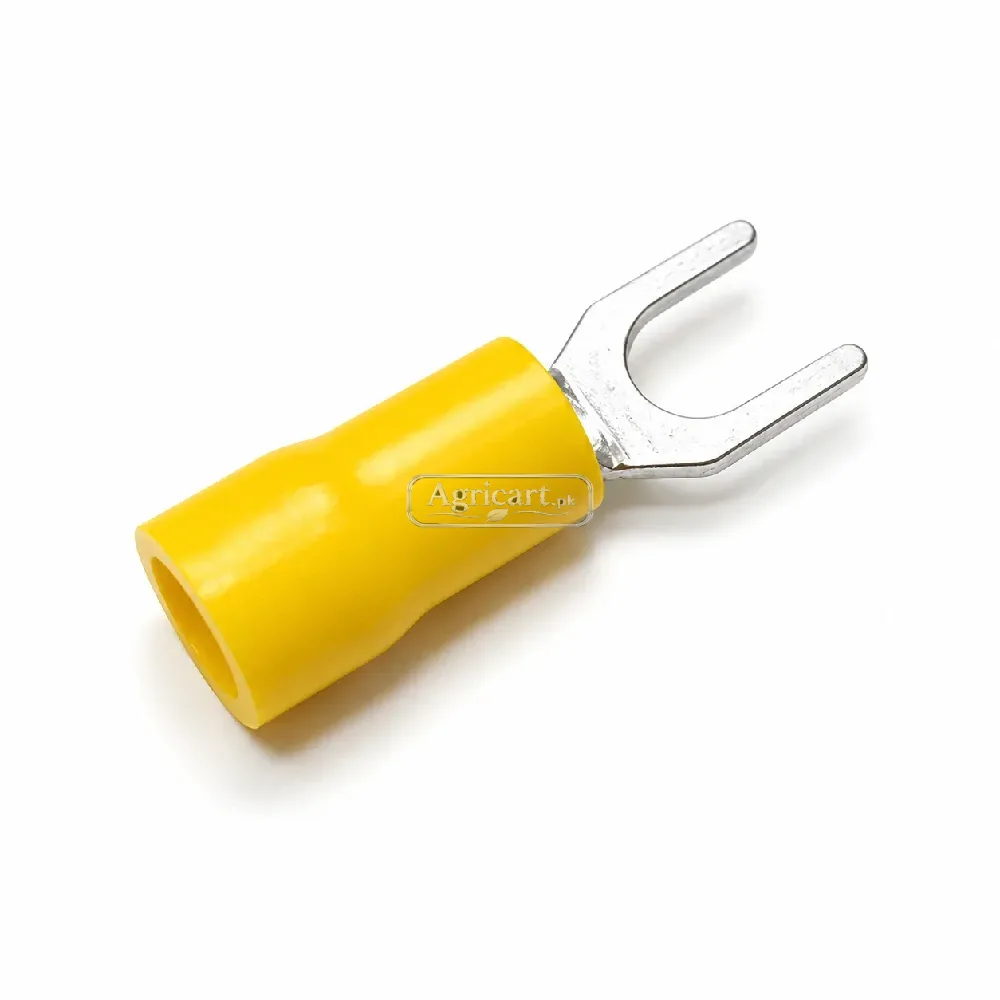
Secure and reliable electrical connections for agricultural machinery and systems. These crimp connectors ensure optimal conductivity and durability.
Wire crimp connectors are essential components for creating strong, durable, and electrically sound connections in various agricultural applications. From irrigation systems and greenhouse controls to heavy machinery wiring, these connectors provide a robust alternative to soldering, offering quick installation and consistent performance. Available in various types, including spade, ring, and butt connectors, they are designed to accommodate different wire gauges and connection requirements, ensuring a secure fit and preventing electrical shorts or disconnections.
Select the correct connector size for your wire gauge. Strip the wire insulation to the appropriate length. Insert the bare wire into the connector barrel. Use a proper crimping tool to firmly crimp the connector onto the wire. Ensure a secure connection by gently pulling on the wire. For insulated connectors, the insulation provides additional protection.
Ensures secure and reliable electrical connections, prevents loose wiring and electrical shorts, quick and easy installation compared to soldering, offers superior vibration resistance, available in various types for diverse applications, enhances safety and system longevity.
Always ensure power is off before working with electrical connections. Use the correct crimping tool for the specific connector type. Do not over-crimp or under-crimp, as both can lead to poor connections. Avoid using damaged or corroded connectors. Consult an electrician for complex wiring tasks.
Consider the wire gauge (AWG) you'll be using. Determine the connector type (e.g., spade, ring, butt) based on your application. Choose between insulated and non-insulated connectors; insulated types offer better protection. Check the material for durability and conductivity (e.g., copper, tinned copper). Ensure compatibility with your crimping tool.
Standard customs procedures apply. Ensure accurate declaration of product type and value. May require specific import permits for certain quantities or specialized types.
Importers should verify compliance with Pakistan's electrical safety standards and any specific regulations for agricultural equipment components. Proper documentation, including origin certificates, is crucial.
Exporters must adhere to international shipping regulations and the import requirements of the destination country. Ensure proper packaging to prevent damage during transit. Compliance with WEEE or RoHS directives may be required for certain markets.
- What are wire crimp connectors used for?
- Wire crimp connectors are used to create secure, solderless electrical connections between wires and electrical components, commonly found in agricultural machinery, vehicles, and various electrical systems.
- How do I choose the right size crimp connector?
- The right size crimp connector is determined by the gauge (AWG) of the wire you are using. Connectors are typically color-coded to indicate their compatible wire gauges (e.g., red for 22-18 AWG, blue for 16-14 AWG, yellow for 12-10 AWG).
- Do I need a special tool for crimping?
- Yes, a dedicated crimping tool is essential for making proper and secure crimps. Using pliers or other unsuitable tools can result in weak connections, potential electrical hazards, and damage to the connector or wire.
- What is the difference between insulated and non-insulated crimp connectors?
- Insulated crimp connectors have a plastic or nylon sleeve over the metal barrel, providing electrical insulation and strain relief. Non-insulated connectors are bare metal and require additional insulation (like heat shrink tubing) after crimping, often preferred for high-temperature applications or when space is limited.
- Are these connectors suitable for outdoor agricultural use?
- For outdoor agricultural use, it is highly recommended to use insulated crimp connectors, especially those with heat-shrink insulation, or to apply additional weatherproofing (like marine-grade heat shrink) after crimping non-insulated types, to protect against moisture, dust, and corrosion.