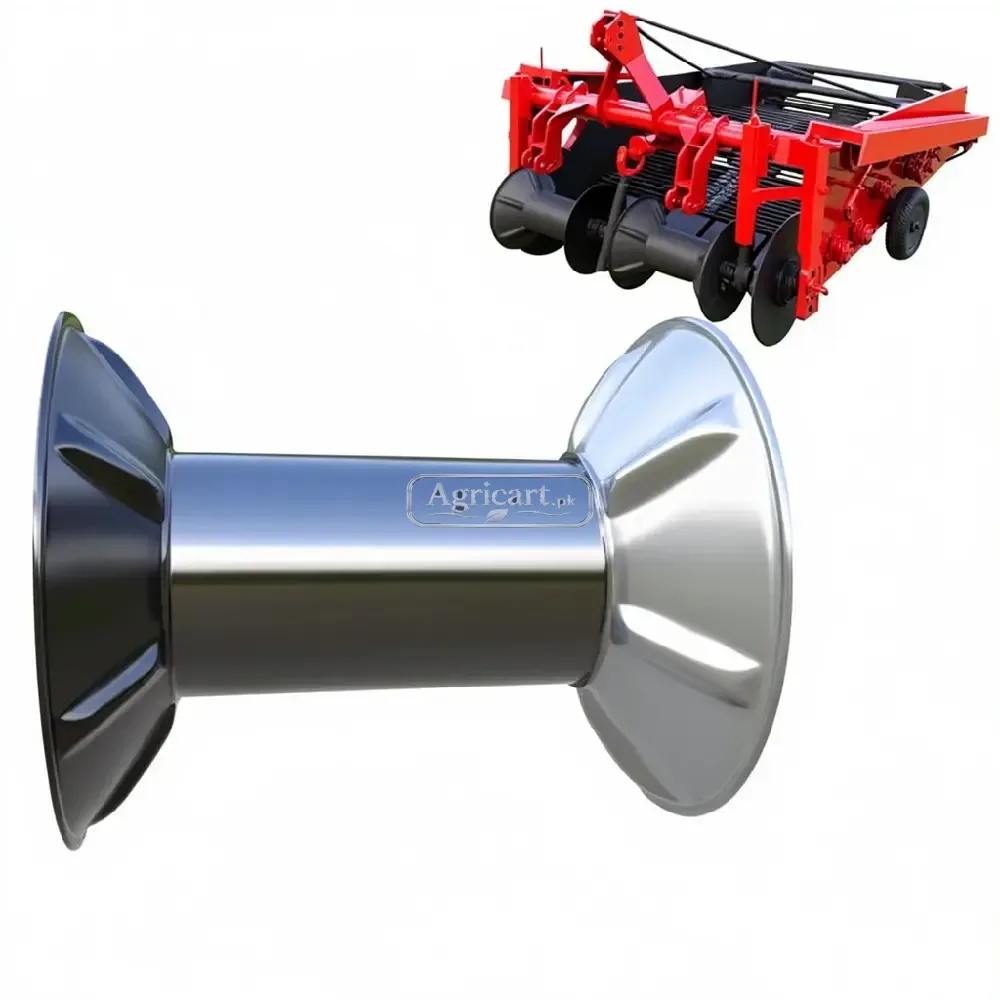
Enhance the efficiency and longevity of your potato harvester with our durable front roller. Designed for smooth operation and optimal soil engagement, this essential component ensures a consistent harvesting depth and reduces wear on your machinery.
Potato Harvester Front Roller
The Potato Harvester Front Roller is a critical component for any potato harvesting operation, designed to precisely control the depth at which the harvester's digging shares penetrate the soil. This ensures that potatoes are lifted efficiently without damage, while minimizing the amount of soil carried into the machine. Constructed from high-grade, wear-resistant materials, our front roller offers exceptional durability and a long service life, even under demanding field conditions. Its robust design contributes to stable machine operation, reducing vibrations and stress on other harvester parts. Regular maintenance and timely replacement of this roller are key to maintaining peak performance and extending the overall lifespan of your potato harvester.
Ensure proper alignment and secure fastening during installation. Regularly inspect the roller for wear, damage, or blockages. Clean the roller after each use to prevent soil buildup. Lubricate moving parts as per your harvester's manual. Replace immediately if significant wear or damage is observed to prevent further machine damage.
Improved harvesting efficiency, reduced potato damage, extended harvester lifespan, stable machine operation, precise depth control, durable construction, lower maintenance costs over time.
Always refer to your potato harvester's owner's manual for specific installation and maintenance instructions. Do not operate the harvester with a damaged or improperly installed front roller. Wear appropriate safety gear during installation and maintenance. Keep away from moving parts during operation.
When selecting a Potato Harvester Front Roller, consider the make and model of your existing harvester to ensure compatibility. Look for rollers made from high-quality, hardened steel or composite materials for maximum durability. Check for proper bearing seals to prevent dirt ingress. Agricart offers a range of front rollers designed to meet various harvester specifications and field conditions. Contact our experts for personalized advice.
Please ensure all necessary import duties and taxes are paid. Proper documentation, including origin certificates and commercial invoices, is required for smooth customs clearance.
Import regulations for agricultural machinery parts in Pakistan may vary. It is advisable to consult with a local customs broker or Agricart's import specialist for the latest requirements and procedures.
For international export inquiries, please contact Agricart's export department. All products are packaged to meet international shipping standards. Export documentation will be provided as per destination country requirements.
8432.90.00
- What is the primary function of a Potato Harvester Front Roller?
- The primary function of a Potato Harvester Front Roller is to control the digging depth of the harvester, ensuring consistent and efficient potato lifting while minimizing soil intake and potato damage.
- How often should I inspect the front roller?
- It is recommended to inspect the front roller before each harvesting season and regularly during operation for any signs of wear, damage, or blockages. Timely inspection helps prevent costly breakdowns.
- Is this front roller compatible with all potato harvester models?
- Compatibility varies by harvester make and model. Please refer to the product specifications or contact Agricart customer service with your harvester's details to confirm compatibility before purchase.
- What materials are used in the construction of this front roller?
- Our Potato Harvester Front Rollers are typically constructed from high-grade, wear-resistant steel or durable composite materials, designed to withstand the harsh conditions of agricultural use.
- How does a worn front roller affect harvesting?
- A worn front roller can lead to inconsistent digging depth, increased potato damage, excessive soil intake, and accelerated wear on other harvester components, ultimately reducing efficiency and increasing operational costs.