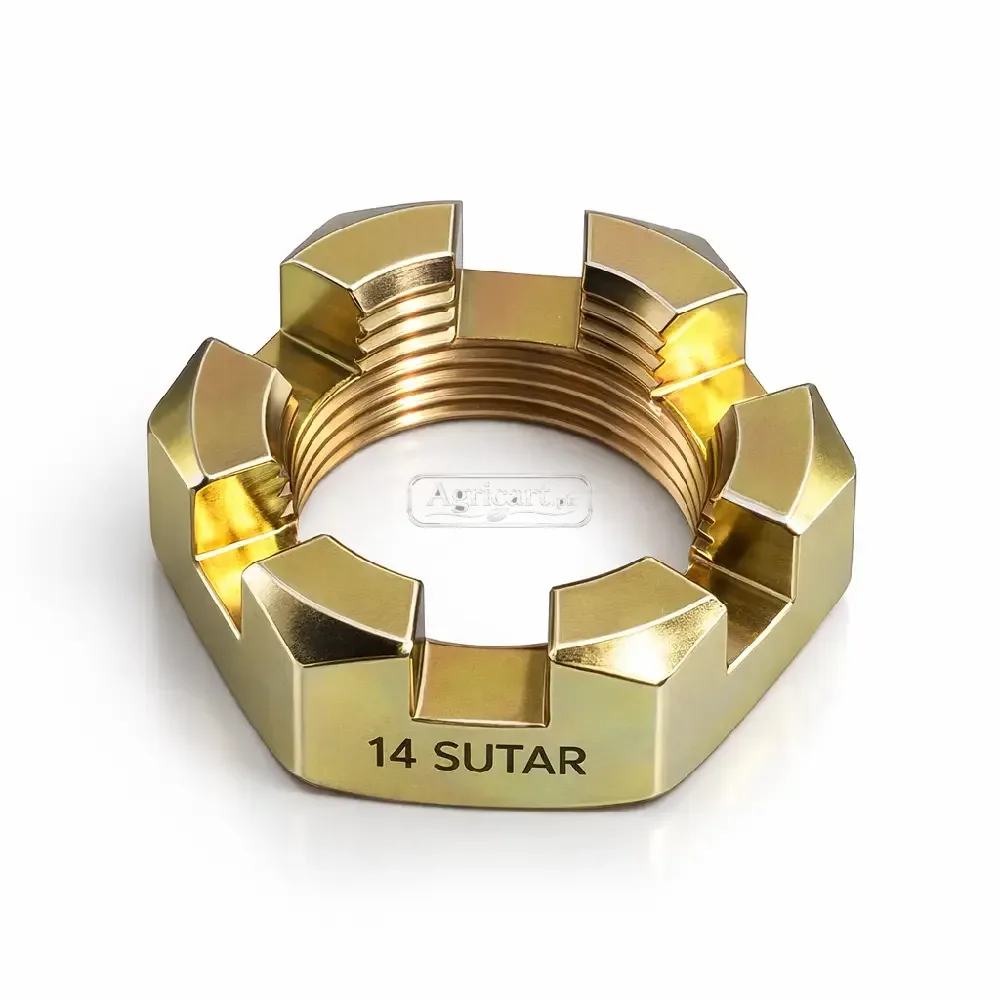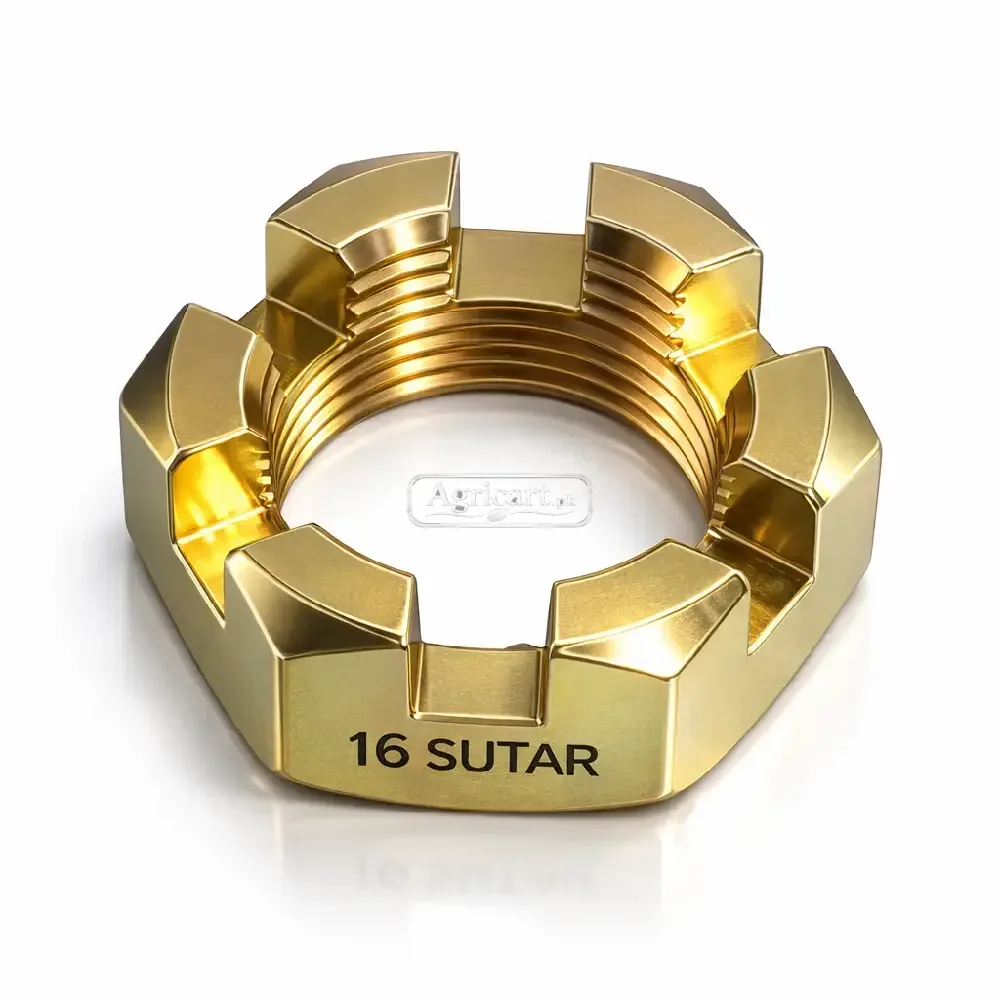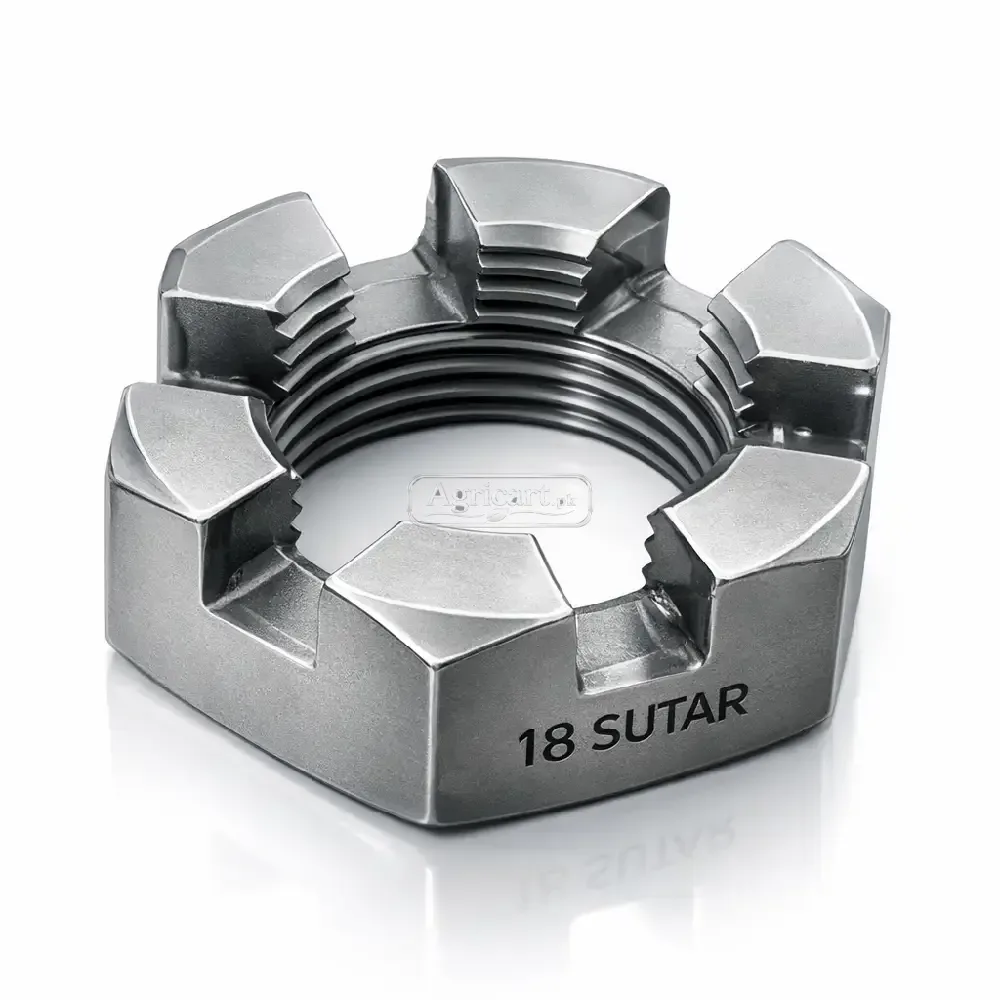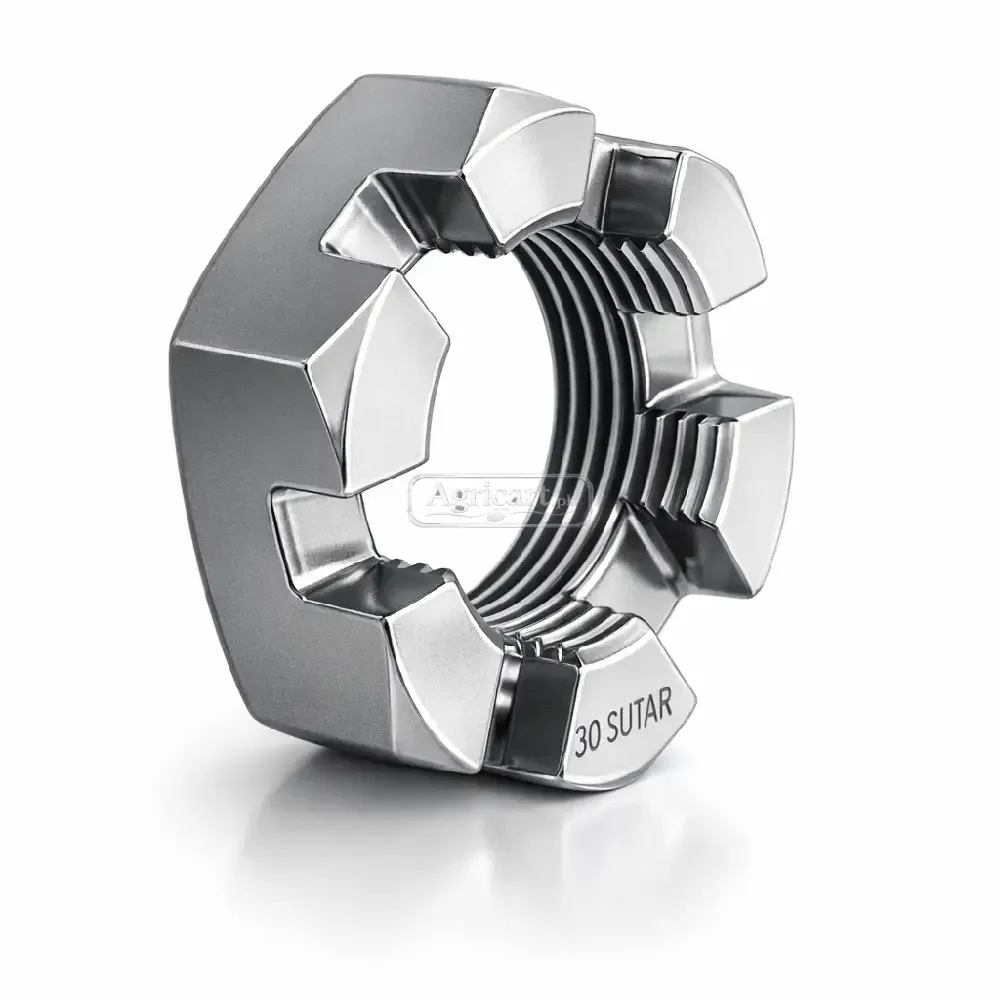
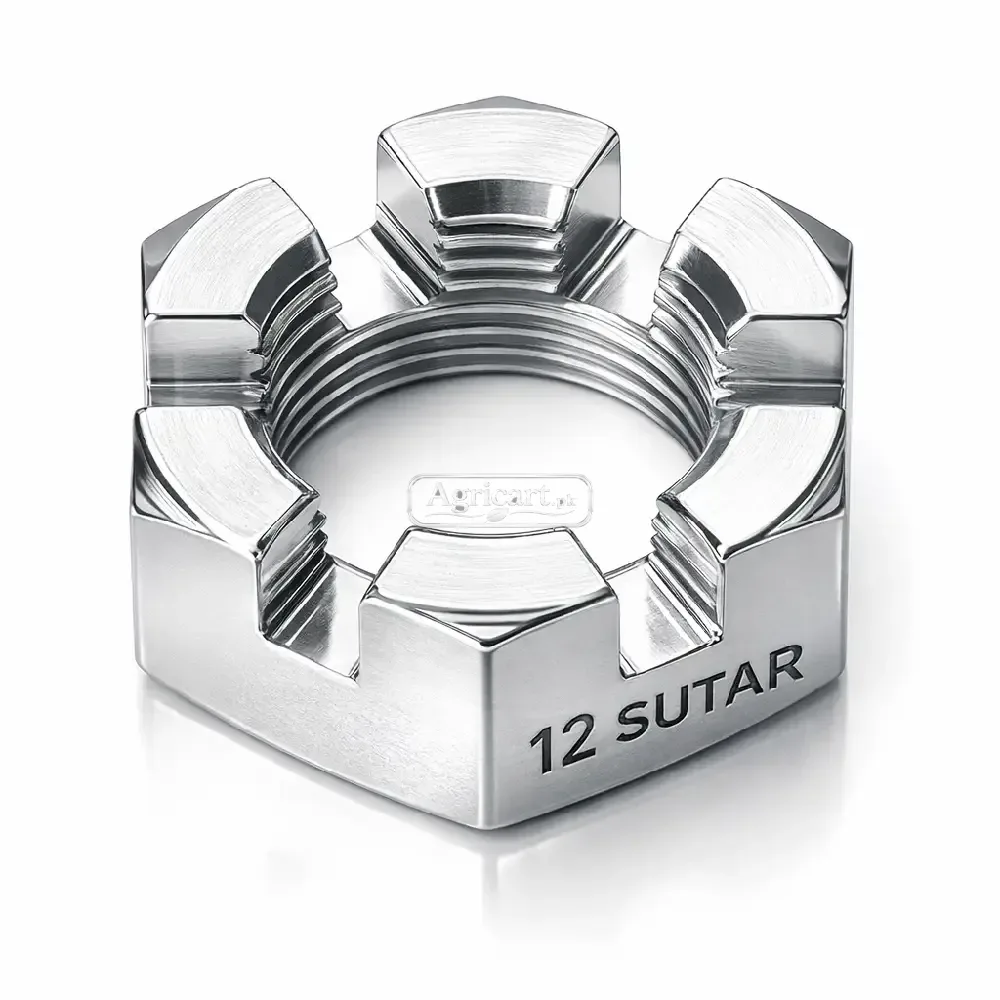
A specialized hexagonal castle nut with a thin thread, designed for secure fastening in applications requiring a cotter pin for locking.
The Hexagon Castle Nut with Thin Thread is an essential component for various mechanical and agricultural applications where robust and secure fastening is paramount. Its unique 'castle' design, featuring slots on one end, allows for the insertion of a cotter pin, effectively preventing the nut from loosening due to vibration or torque. The thin thread profile makes it suitable for specific shafts and bolts where standard thread nuts might not fit or provide optimal engagement. Crafted from high-quality materials, this nut ensures durability and reliable performance in demanding environments, making it ideal for agricultural machinery, automotive parts, and other industrial equipment.
Ensure the nut's thread matches the bolt's thread. Tighten the nut to the recommended torque specification. Align a slot with the cotter pin hole in the bolt/shaft and insert a cotter pin. Bend the ends of the cotter pin to secure it. Always use appropriate tools for tightening and cotter pin insertion.
Provides superior vibration resistance and prevents loosening. Offers enhanced safety through positive locking with a cotter pin. Durable construction ensures long-lasting performance. Thin thread design allows for use in specialized applications. Ideal for critical fastening points in machinery.
Do not overtighten, as this can damage the threads or the component. Always use the correct size cotter pin. Replace damaged or worn nuts immediately. Not suitable for applications where frequent removal is required without cotter pin replacement.
When purchasing Hexagon Castle Nuts with Thin Thread, consider the material (e.g., steel, stainless steel) based on environmental conditions and load requirements. Verify the thread size and pitch to ensure compatibility with your existing bolts or shafts. Check the grade of the nut to match the strength requirements of your application. For agricultural use, prioritize nuts with good corrosion resistance. Always buy from reputable suppliers to ensure quality and adherence to standards.
Standard customs procedures apply. Ensure correct declaration of material composition and dimensions for accurate tariff classification.
Importers must comply with all local regulations regarding fastener quality and safety standards. Certificates of origin and material specifications may be required.
Exporters should ensure packaging meets international shipping standards to prevent damage. Provide all necessary documentation, including commercial invoice and packing list.
- What is a Hexagon Castle Nut Thin Thread used for?
- It is primarily used for secure fastening in applications where vibration or torque might cause standard nuts to loosen. The 'castle' design allows for a cotter pin to be inserted, providing a positive locking mechanism, especially common in agricultural machinery and automotive components.
- How does a castle nut prevent loosening?
- A castle nut has slots on its top surface. Once tightened, a cotter pin is inserted through a hole in the bolt or shaft and through one of the nut's slots. Bending the ends of the cotter pin locks the nut in place, preventing it from rotating and loosening.
- What is the significance of 'thin thread'?
- The 'thin thread' refers to a finer thread pitch compared to standard nuts. This allows for more precise adjustments and can be crucial in applications where space is limited or a specific thread profile is required for optimal engagement with a matching bolt or shaft.
- Can I reuse a cotter pin with this nut?
- It is generally recommended to use a new cotter pin each time the nut is removed and reinstalled. Cotter pins can weaken or deform when bent, reducing their effectiveness in providing a secure lock.