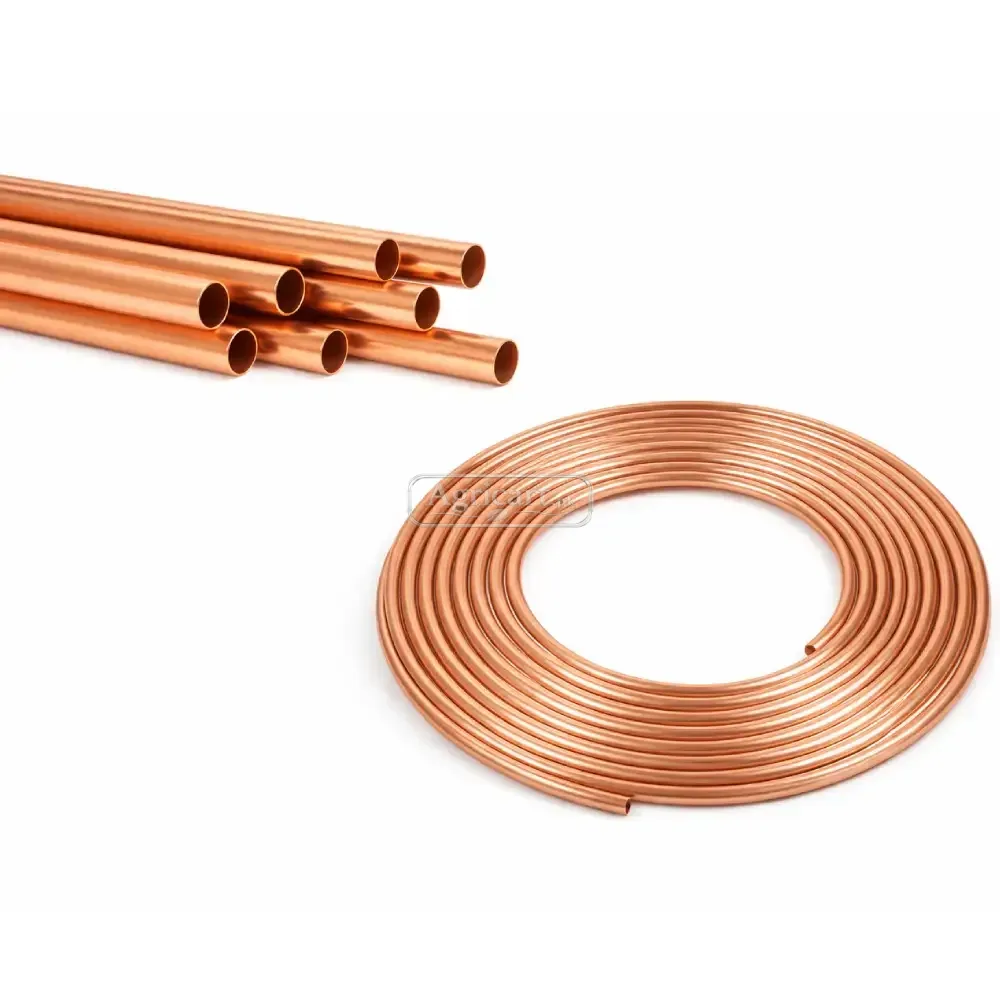
High-quality copper pipes for various agricultural and industrial applications, offering excellent corrosion resistance and thermal conductivity.
Copper Pipe
Agricart offers a comprehensive range of high-quality copper pipes, essential for a multitude of applications in agriculture, plumbing, HVAC, and industrial settings. Our copper pipes are manufactured to stringent standards, ensuring superior durability, exceptional corrosion resistance, and excellent thermal conductivity. Available in various diameters and lengths, both rigid and flexible (coiled) options, they are ideal for water supply lines, refrigeration systems, irrigation setups, and general fluid transfer. Copper's natural antimicrobial properties also make it a hygienic choice for water systems. Choose Agricart for reliable and long-lasting copper piping solutions.
Ensure proper sizing and type (rigid or flexible) for your specific application. Use appropriate tools for cutting, bending, and joining. Follow local plumbing and safety codes during installation. For refrigeration, ensure pipes are clean and dry before use. Avoid direct contact with highly acidic or alkaline substances without proper protective coatings.
Do not use copper pipes for gas lines unless specifically rated for such use. Avoid excessive bending that can lead to kinking or weakening of the pipe. Always wear appropriate personal protective equipment (PPE) during installation. Ensure proper ventilation when soldering.
When purchasing copper pipes, consider the application (water, refrigeration, HVAC). Determine the required diameter and wall thickness. Choose between rigid (straight lengths) and flexible (coiled) options based on installation needs. Check for relevant industry standards (e.g., ASTM, EN) to ensure quality. Agricart offers various grades and sizes to meet diverse requirements.
Copper pipes are generally subject to standard import duties and taxes. Ensure proper classification under HS Code 7411.10.00 (Tubes and pipes of refined copper). Documentation including commercial invoice, packing list, and bill of lading/airway bill is required.
Importers should verify current import regulations and tariffs for copper products in Pakistan. Ensure compliance with PSQCA standards if applicable. Large quantities may require specific import licenses or permits. Check for any anti-dumping duties that may apply.
Exporters of copper pipes from Pakistan must adhere to local export regulations and international trade laws. Ensure proper packaging for international transit. Obtain necessary export documentation and customs clearances. Compliance with destination country's import requirements is crucial.
7411.10.00
- What are the primary uses of copper pipes in agriculture?
- In agriculture, copper pipes are used for irrigation systems, water supply lines for livestock, greenhouse heating, and sometimes in specialized spraying equipment due to their corrosion resistance and durability.
- Are copper pipes suitable for drinking water?
- Yes, copper pipes are widely considered safe and suitable for drinking water supply lines. Copper has natural antimicrobial properties that can inhibit bacterial growth, making it a hygienic choice.
- What is the difference between rigid and flexible copper pipes?
- Rigid copper pipes (often in straight lengths) are harder and used where straight runs are needed, typically joined by soldering. Flexible copper pipes (often coiled) are softer, easier to bend, and ideal for applications requiring curves or where soldering is difficult, such as refrigeration lines.
- How do I choose the correct size of copper pipe?
- The correct size depends on the flow rate required, pressure, and the specific application. Consult plumbing or HVAC guidelines, or a professional, to determine the appropriate diameter and wall thickness for your needs.
- Can copper pipes be recycled?
- Yes, copper is 100% recyclable without any loss of its original properties. Recycling copper is an environmentally friendly practice that conserves natural resources and reduces energy consumption.