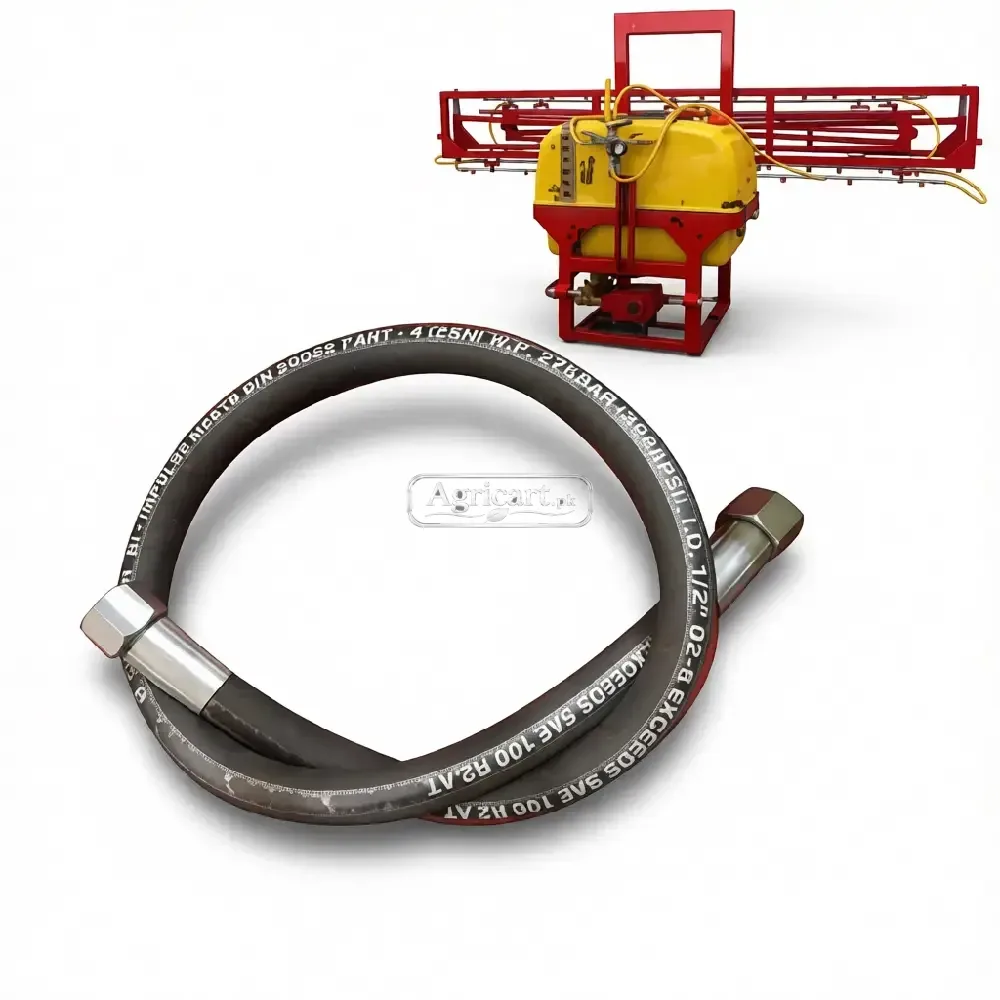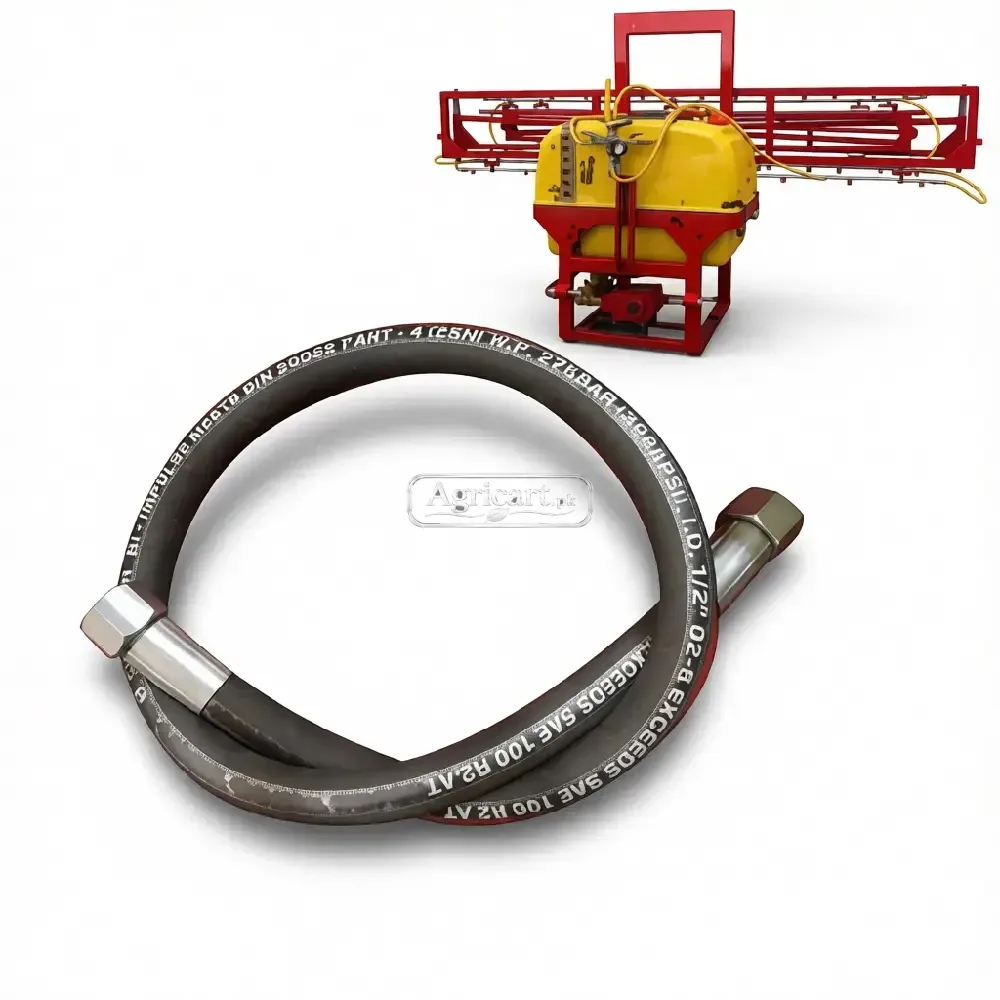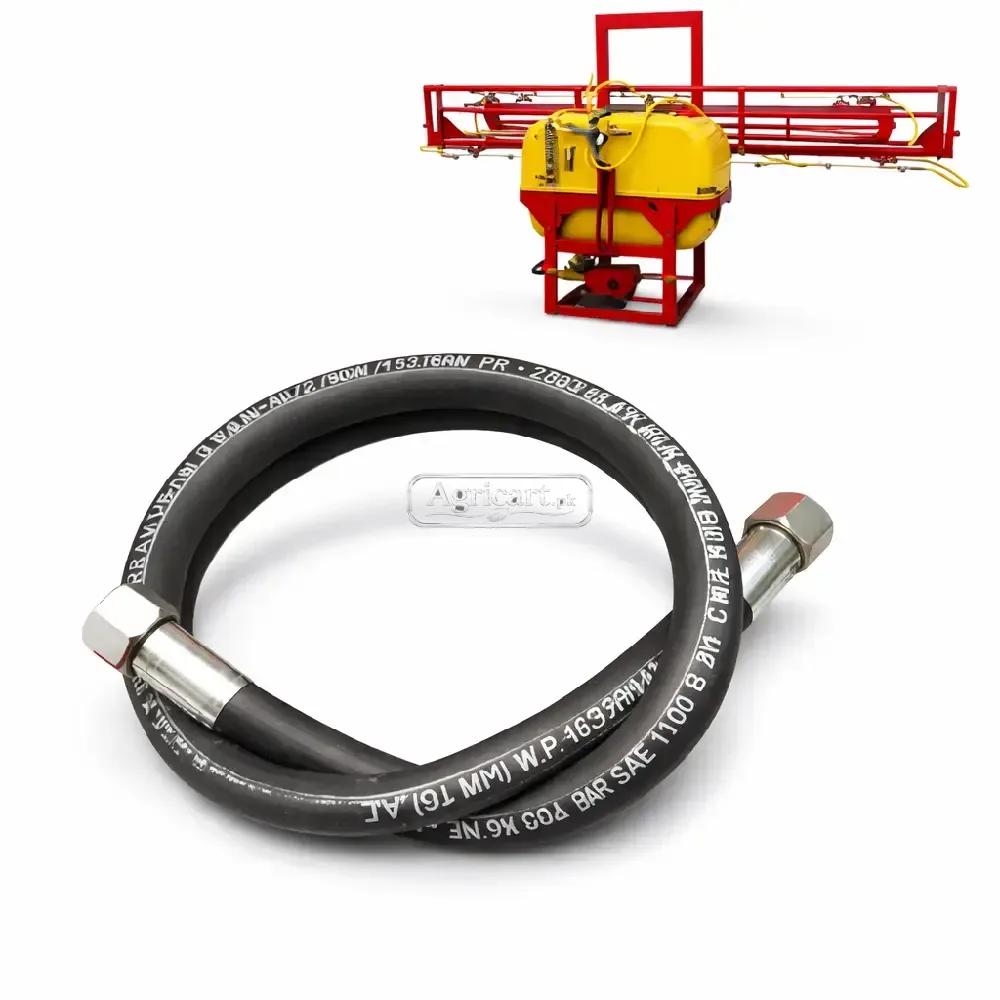
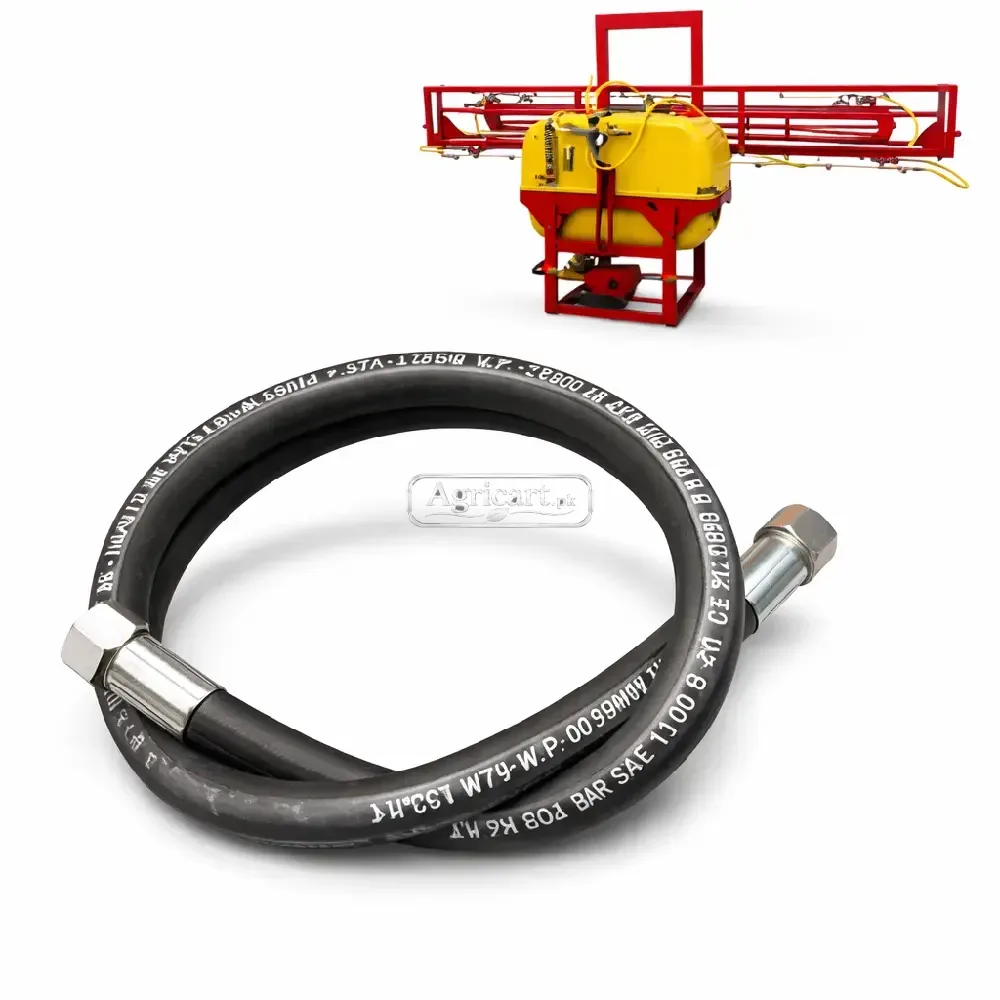
Durable high-pressure hose designed for boom sprayers, ensuring efficient and consistent delivery of pesticides, herbicides, and fertilizers. Built to withstand demanding agricultural conditions.
Boom Sprayer High-Pressure Spray Hose
The Boom Sprayer High-Pressure Spray Hose is an essential component for any modern agricultural spraying operation. Engineered for maximum durability and performance, this hose can handle the high pressures required for effective application of various agricultural chemicals. Its robust construction resists kinks, abrasions, and chemical degradation, ensuring a long service life and reliable operation in the field. The hose is flexible enough for easy handling and installation, yet strong enough to maintain integrity under stress. Ideal for use with tractor-mounted or trailed boom sprayers, it guarantees a consistent flow rate and even distribution, leading to optimal crop protection and yield improvement. Invest in a quality spray hose to minimize downtime and maximize your spraying efficiency.
Always ensure the hose is properly connected to the sprayer and nozzle. Inspect for any damage or wear before each use. Avoid kinking or sharp bends during operation. Clean the hose thoroughly after each use to prevent chemical residue buildup. Store in a cool, dry place away from direct sunlight and extreme temperatures.
Enhanced durability and chemical resistance, consistent spray pattern for uniform application, reduced risk of leaks and downtime, improved efficiency in pesticide/herbicide application, long service life, and cost-effectiveness.
Do not exceed the maximum working pressure specified for the hose. Avoid contact with sharp objects or abrasive surfaces. Always wear appropriate personal protective equipment (PPE) when handling chemicals and operating the sprayer. Do not use for purposes other than intended agricultural spraying.
Consider the length and diameter required for your boom sprayer. Check the maximum working pressure rating to ensure it meets your equipment's needs. Look for hoses with good chemical resistance to the specific products you use. Material quality and flexibility are also key factors for durability and ease of use. Ensure fittings are compatible with your existing sprayer system.
Please ensure proper documentation for agricultural machinery parts. HS code 4009.31.00 applies to tubes, pipes and hoses, of vulcanised rubber other than hard rubber, reinforced or otherwise combined with textile materials, without fittings, or with fittings attached, for working pressure exceeding 10 MPa.
Importers must comply with all local agricultural equipment import regulations and standards. Ensure product specifications meet Pakistani agricultural safety and quality benchmarks. Tariffs and duties may apply based on current import policies.
Exporters should verify destination country's import requirements for agricultural spray hoses. Ensure all necessary export documentation, including origin certificates and quality assurances, are provided. Packaging must be suitable for international transit.
4009.31.00
- What is the typical lifespan of a high-pressure spray hose?
- The lifespan of a high-pressure spray hose depends on usage frequency, maintenance, and the chemicals it handles. With proper care, it can last several seasons.
- Can this hose be used with all types of agricultural chemicals?
- Our high-pressure spray hoses are designed for broad chemical compatibility. However, always check the specific chemical resistance rating for highly corrosive or specialized chemicals to ensure optimal performance and safety.
- How do I choose the correct diameter for my boom sprayer?
- The correct diameter depends on your sprayer's pump output and the required flow rate. Consult your sprayer's manual or a professional to determine the optimal hose diameter for efficient operation.
- Is this hose resistant to UV radiation?
- Yes, our boom sprayer high-pressure hoses are typically manufactured with UV-resistant materials to ensure durability and prevent degradation from prolonged sun exposure in the field.