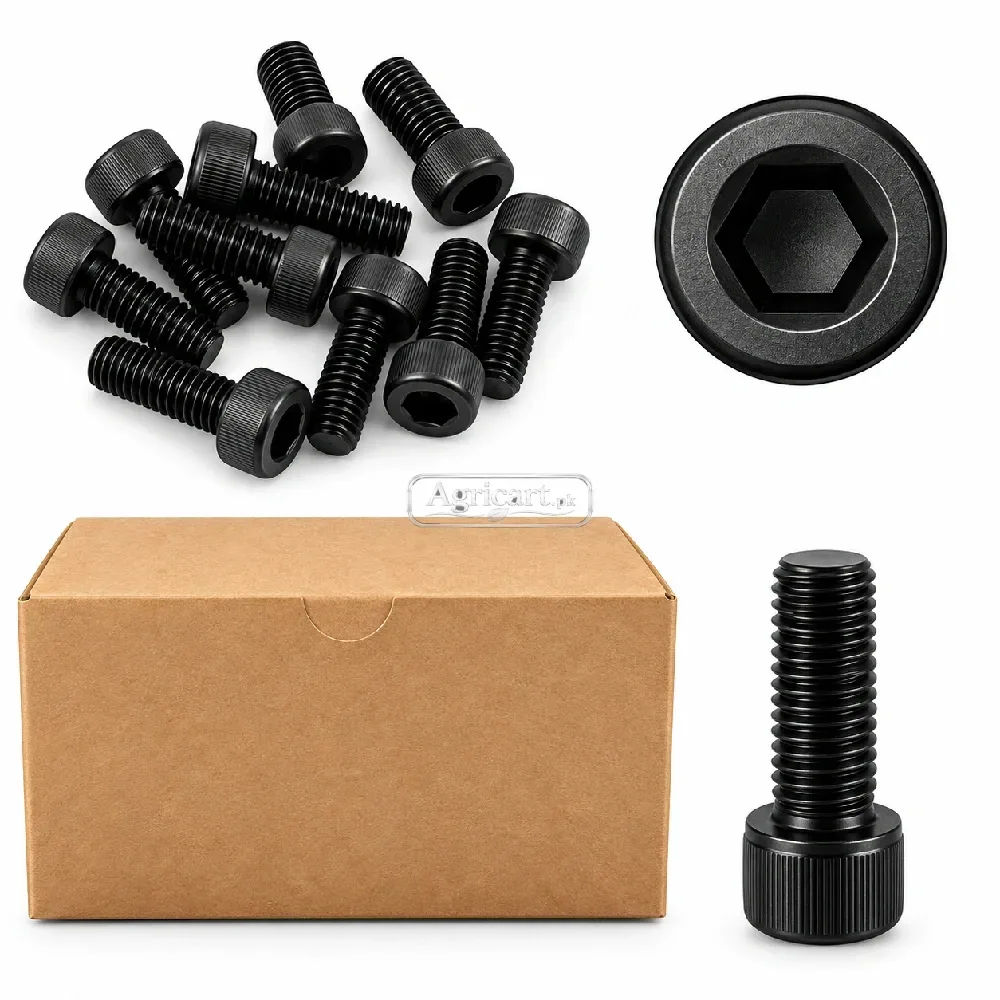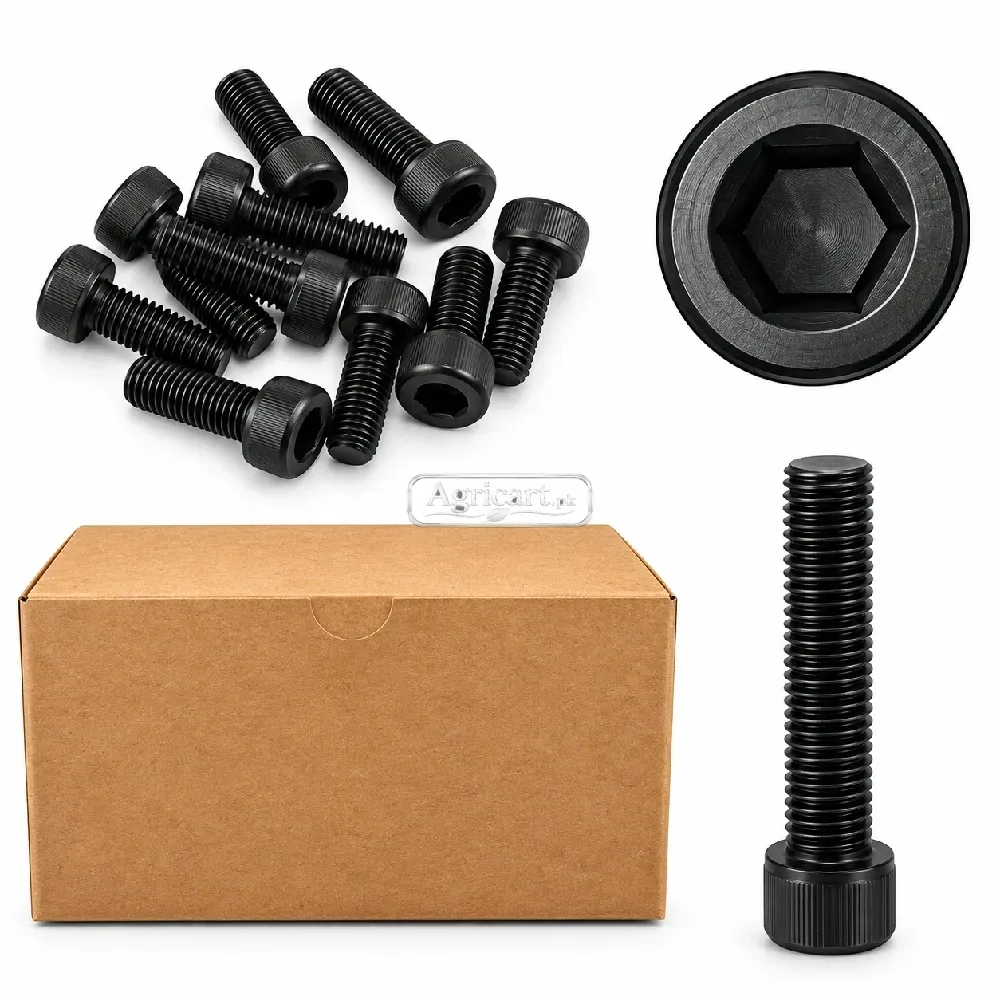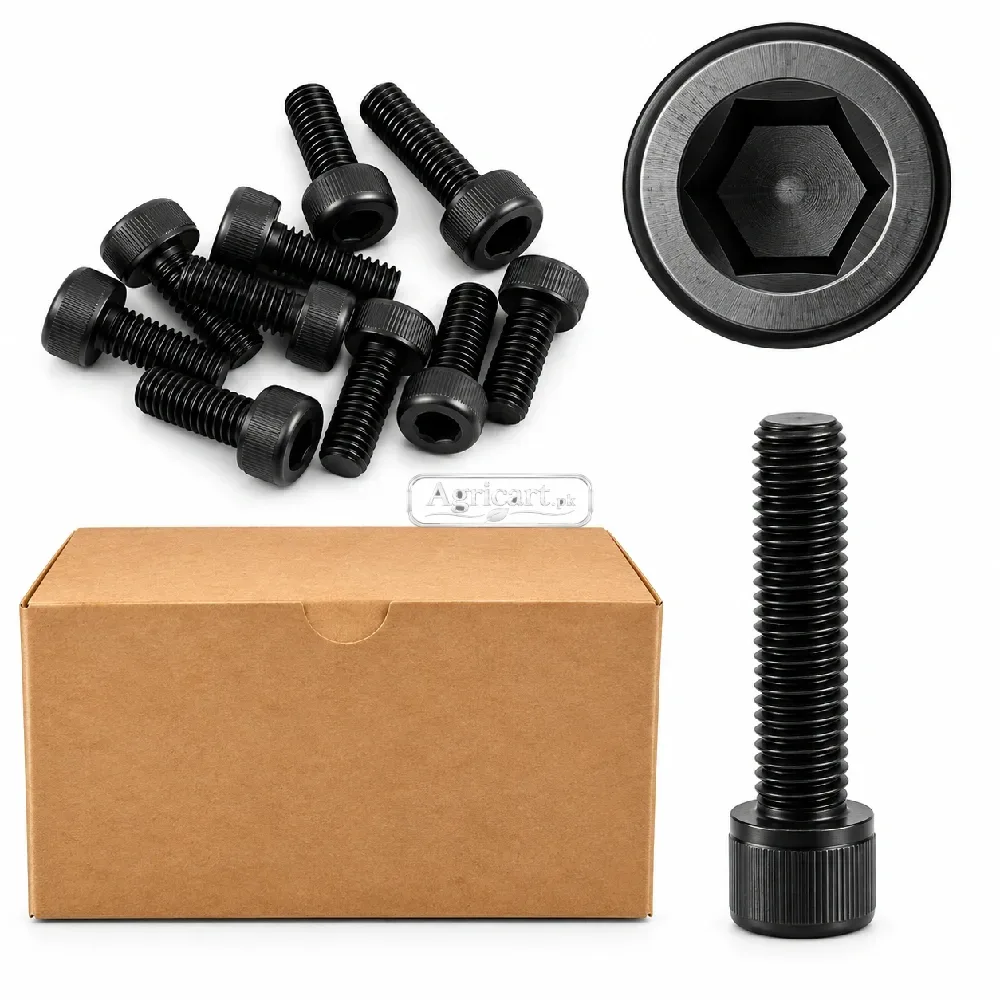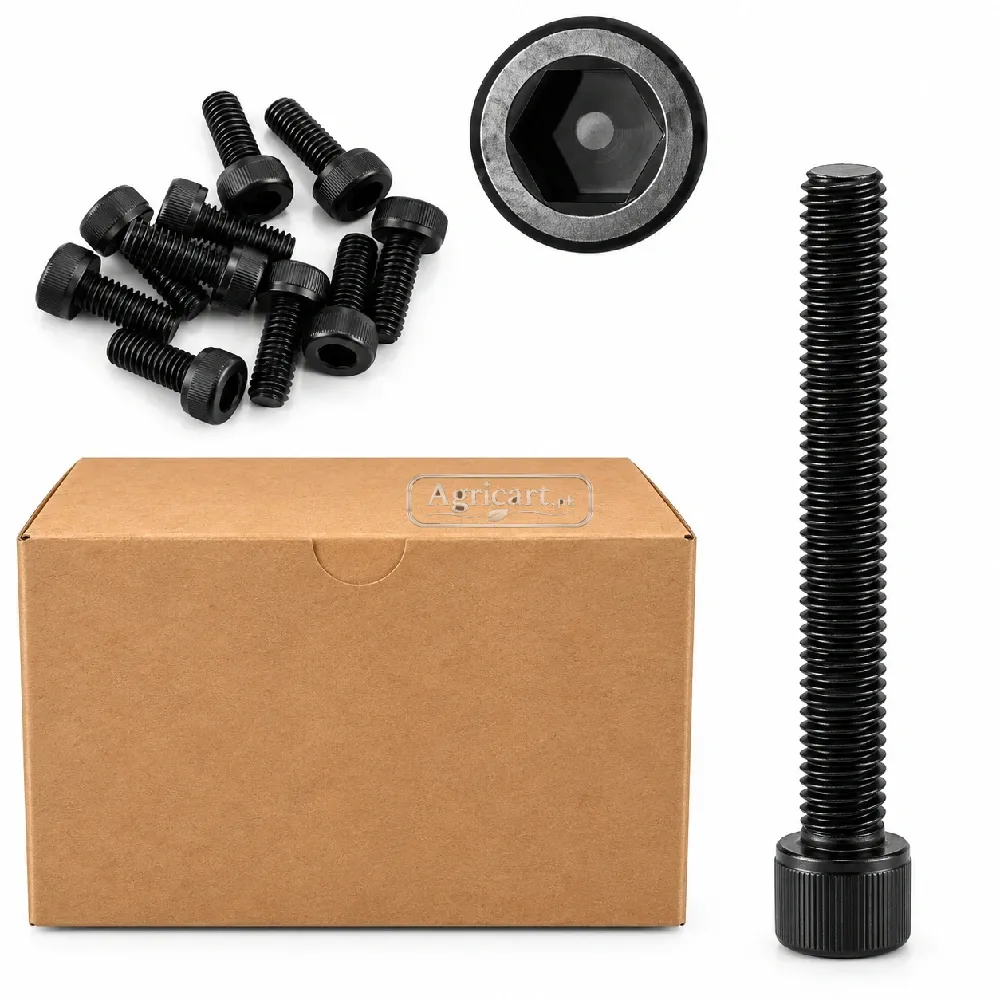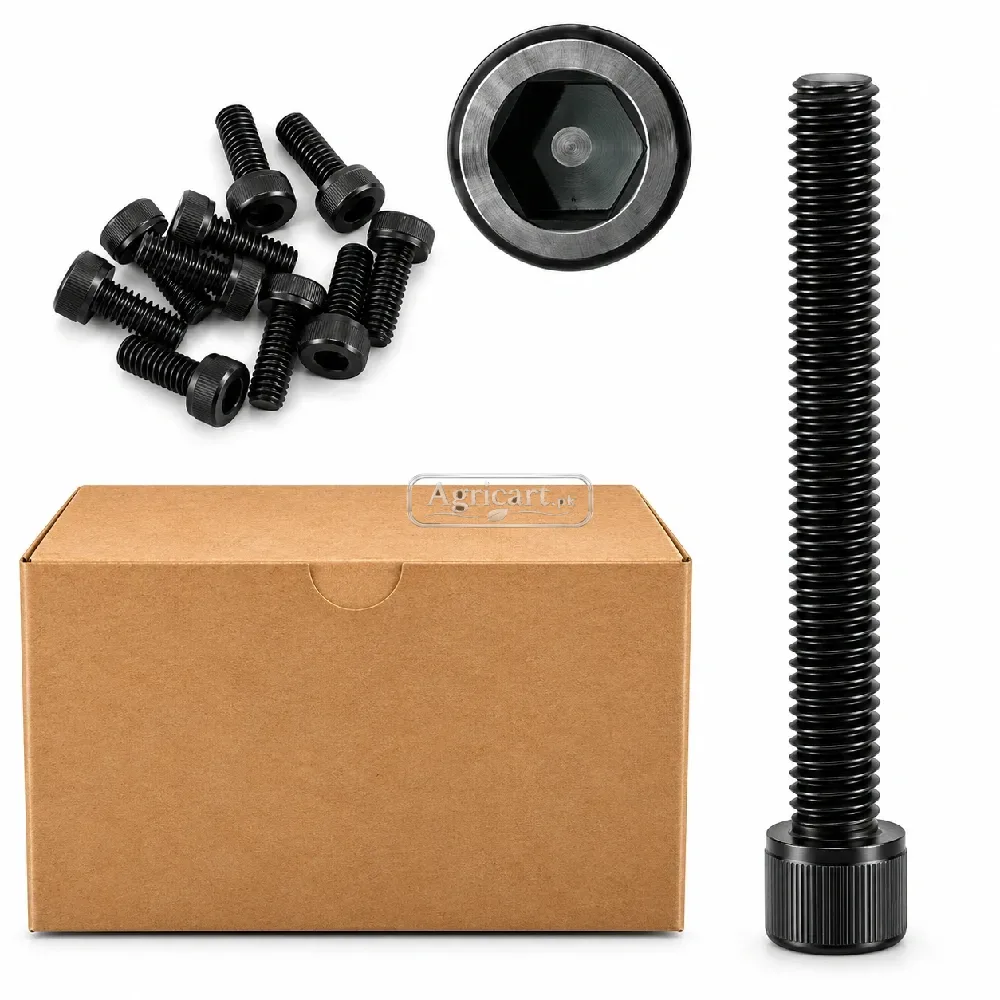
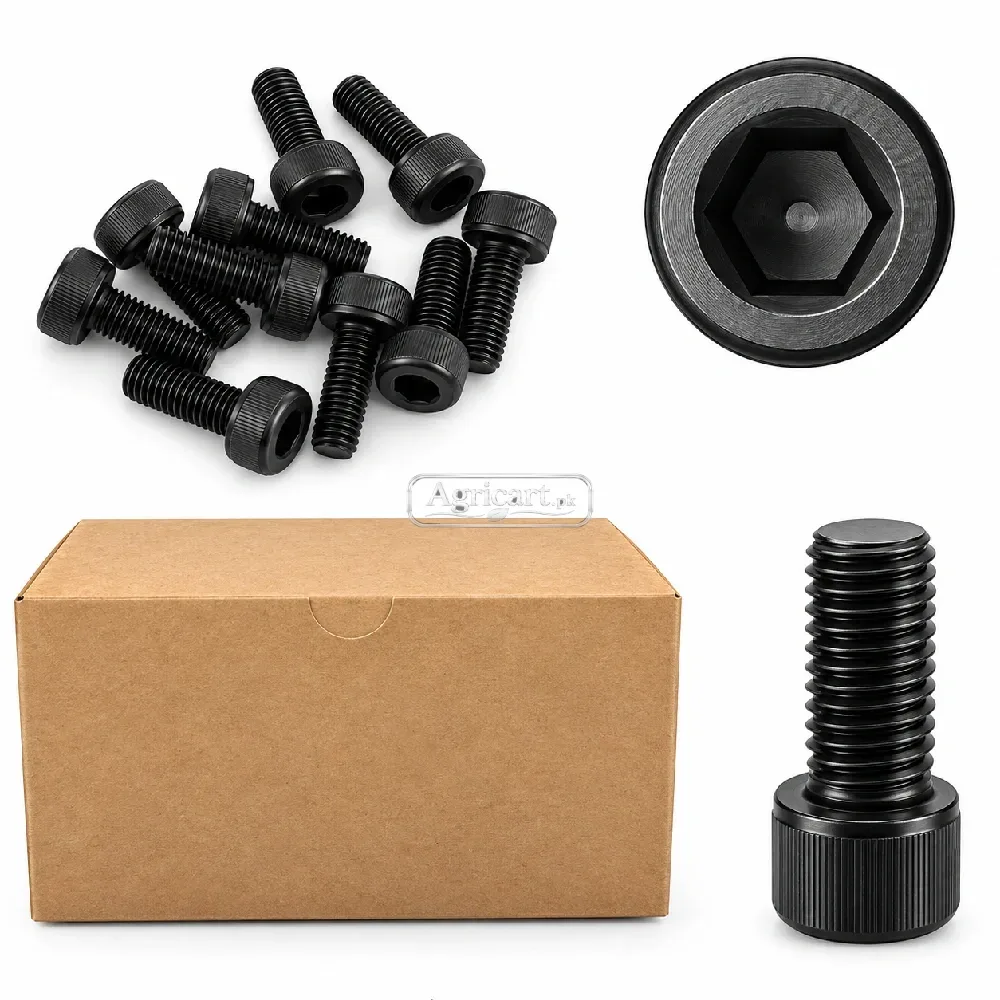
High-quality 6mm Allen (hex) socket head bolts, ideal for secure and flush fastening in various agricultural and industrial applications.
6mm Allen Bolt Socket Head
These 6mm Allen (hex) socket head bolts are precision-engineered for robust and reliable fastening. Featuring a cylindrical head with a hexagonal recess, they are designed to be driven by an Allen wrench or hex key, allowing for a flush finish and strong torque application. Manufactured from durable materials, these bolts offer excellent resistance to wear and corrosion, making them suitable for demanding environments in agriculture, machinery, and general construction. Their compact head design is perfect for applications where space is limited or a smooth surface is desired.
Select the appropriate length for your application. Use an Allen wrench or hex key of the correct size (typically 5mm for a 6mm bolt) to tighten or loosen the bolt. Ensure the bolt is fully seated and tightened to the recommended torque specifications to prevent loosening and ensure a secure connection. Avoid over-tightening to prevent stripping the threads or damaging the material.
Provides a strong, secure, and flush fastening. Resistant to vibration and loosening. Ideal for applications requiring a clean, low-profile finish. Durable construction ensures long-lasting performance in harsh conditions. Easy to install and remove with standard hex keys.
Always use the correct size hex key to avoid stripping the socket. Do not use damaged or worn bolts. Ensure the bolt material is compatible with the application environment to prevent corrosion or failure. Over-tightening can lead to thread damage or material stress.
When purchasing 6mm Allen bolts, consider the material (e.g., steel, stainless steel) based on environmental exposure and strength requirements. Check the thread pitch and length to ensure compatibility with your existing components. For agricultural use, prioritize bolts with good corrosion resistance. Agricart offers a range of high-quality Allen bolts to meet diverse needs.
Standard customs procedures apply for fasteners. Ensure proper documentation for material composition and origin. No specific restrictions beyond general import regulations for metal goods.
Importers must comply with PSQCA standards for fasteners where applicable. Verify material certifications and ensure packaging meets international shipping requirements. Bulk imports may require specific permits.
Exporters should ensure compliance with destination country's import regulations and standards for fasteners. Provide accurate HS codes and detailed product descriptions. Packaging must be robust for international transit.
7318.15.00
- What is a 6mm Allen bolt?
- A 6mm Allen bolt, also known as an M6 socket head cap screw, is a type of threaded fastener with a cylindrical head and a hexagonal drive recess, designed to be tightened with an Allen wrench or hex key. The '6mm' refers to the nominal diameter of the bolt's threads.
- What are the common uses for 6mm Allen bolts in agriculture?
- In agriculture, 6mm Allen bolts are commonly used for assembling and repairing farm machinery, implements, irrigation systems, and various structural components where a strong, flush, and vibration-resistant fastening is required. Their compact head allows for use in tight spaces.
- What material are these Allen bolts made from?
- Our 6mm Allen bolts are typically made from high-strength steel, often with a black oxide finish for added corrosion resistance and durability. Specific material grades (e.g., 8.8, 10.9, or stainless steel) may vary by batch; please check product specifications for details.
- How do I choose the correct length for my 6mm Allen bolt?
- To choose the correct length, measure the combined thickness of the materials you are fastening, plus an additional length for the nut (if applicable) and at least 2-3 threads to protrude beyond the nut for a secure hold. Ensure the bolt is not too long to interfere with other components.
- Can these bolts be reused?
- While Allen bolts can often be reused, it is generally recommended to replace them, especially in critical applications or if there are signs of wear, thread damage, or corrosion. Repeated tightening and loosening can reduce their strength and reliability.